Posts

Showing posts with the label Development

Opinion: How to fund Boulder’s building projects without a tax increase

The (re)emergence of the need to fund repairs and replacements of multiple City of Boulder buildings has encouraged me to try (again) to interest the city council in the large increase in Boulder’s spending that has occurred. I think this is important because, based on my analysis to date, the city, without seriously impacting levels of service (LOS), could reduce its operating budget and thereby save enough to fund most, if not all, of the required building work without a tax increase. I started by looking at the overall budget. It increased (inflation-adjusted) by about 23% over the last 10 years. Then I deducted the capital expenditures, so that it only reflected the operating budget, which in theory measures how much is being expended to pay staff and others to maintain LOS. The operating budget per capita (inflation-adjusted) increased by over 18% during the last 10 years; the number of employees increased by around 200 to well over 1,500, even after eliminating the library em...
Opinion: Boulder’s water supply and climate change

From observing the recent city council discussions on water, I thought it would be useful to go over some of the basics. Boulder’s water comes from three sources: North Boulder Creek (the “Watershed” below Arapahoe Glacier), Middle Boulder Creek (flows into Barker Reservoir near Nederland), and the Colorado-Big Thompson project (from the Colorado River, includes Windy Gap reservoir). North Boulder Creek drains the east side of Arapahoe Peak; the water is stored in multiple small lakes/reservoirs within the Watershed. The water flows into the Betasso Pipeline, starting on the west side of the Peak-to-Peak Highway near Caribou Ranch, then to the Betasso Treatment Plant near Sugarloaf. Barker Reservoir water is piped to Koessler Lake, west of Green Mountain, and then down a pipeline to Boulder Canyon and up to the Betasso plant. Some of this water runs down to the hydro plant in Boulder Canyon. The C-BT water flows from the Colorado River headwa...

Opinion: More on the “housing crisis” and what Coloradans think

My thanks to both the Daily Camera and the Denver Post for publishing my opinion piece in last Sunday’s editions. It was quite long; their indulgence was much appreciated. Also, apologies to former Denver Mayor Hancock; I misspelled his name. I received many emails on this, almost all in support of limiting growth in Colorado. One raised the concern that the “buy-down” program (exchanging down payment assistance for limiting future price increases) would add more housing units. I should have made it clear that this program targets existing units, so it won’t add more.   I thought I’d expand on what the 1,024 Coloradans said in the survey I discussed. The full survey is at  https://coloradosprawl.com/ polls/  and the article on it is at  www.snowbrains.com  entitled “Survey finds majority of Coloradans are unhappy with the state’s rapid population growth.”   Here are some of the survey’s questions:   “The U.S. Department of Agriculture calculates that C...

Opinion: Bad land use bills abound from our Democratic-controlled Legislature

After my column on the Zenzinger/Kirkmeyer land use bill appeared two weeks ago, those legislators told me that the draft they sent me was just for my review and was not for publication. This was not clear to me in their original communication. Anyway, I apologized to them. And, whatever their bill’s flaws, it was way better than the latest “housing crisis” bill that I discuss here. Representatives Steven Woodrow and Iman Jodeh’s bill, HB24-1313, sets housing density standards for “transit areas,” those within a half mile of a transit corridor station. It first incentivizes this increase in density, but if the community doesn’t comply, it forces them to do it anyway. All of this will be supervised by Polis’s Department of Local Affairs. Their bill starts with the state demographer making a precise forecast of Colorado’s growth — “ONE MILLION SEVEN HUNDRED THOUSAND TWO HUNDRED (more) PEOPLE BY 2050.” That’s about a 30% increase, around 1% per year compounded. This is obviously based on ...

Opinion: Climate change and Boulder’s shrinking water supply

I’m not a professional water supply engineer. But I’ve learned enough over my decades of involvement in our city government to be very concerned about our future ability to keep providing adequate water for existing residents and businesses, much less the significant amounts of additional development being approved. Boulder’s water comes from three sources: The city-owned watershed  is on the east side of the Continental Divide, from South Arapahoe Peak to Niwot Ridge. It feeds many small reservoirs, and then comes via pipeline from above the Peak-to-Peak Highway to the Betasso treatment plant on Sugarloaf Road. We also own water  coming down Middle Boulder Creek, stored in Barker Reservoir near Nederland, and delivered via the Boulder Canyon gravity pipeline past the Boulder Canyon hydroelectric plant to Betasso. About a third comes  from our shares of the Colorado-Big Thompson Project (managed by the Northern Colorado Water Conservancy District), piped from th...

Featured Piece: Let the citizens vote on CU South

In my almost 40 years in Boulder politics, I have never seen a project create such controversy, and it’s no surprise: CU South is the size of downtown Boulder both in acreage and development potential. The proposed “100-year design” flood detention pond is inadequate given climate change and the limited pond size, which cannot reasonably be expanded once CU develops the nearby area. The deal was negotiated without investigating a land swap with city-owned land north of the city limits. Condemnation of the needed property was apparently not even looked at. And it was done without a proper flood control master plan to evaluate the costs and benefits of projects on Boulder’s many creeks, determine which ones were worth doing, and then prioritize them based on the most benefit (including life/safety) for the least cost. Boulder’s politics have worked best, and created the least conflict, when the processes are open and the citizens can observe and engage as matters proceed. Sometim...

Opinion: CU South – Huge, dense, expensive and wet

Image
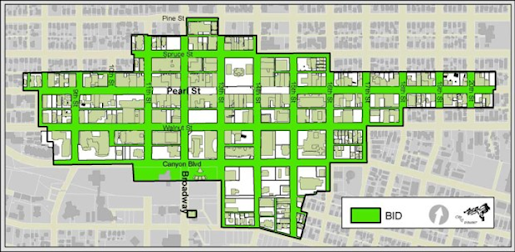
It appears that no one has really examined what the proposed CU South development would look like. Would it be an open park-like setting, or dense like downtown, or what? The current annexation agreement would allow CU or a private owner to build up to 750,000 square feet of non-residential development. Then to meet the annexation agreement’s 2-to-1 minimum residential-to-non-residential floor area ratio, 1,500,000 square feet of residential development would be required, for a total of 2.25 million square feet. And much more residential is allowed. Compare this to downtown Boulder. The Downtown Boulder Inc. website indicates that the downtown Boulder Improvement District (BID) has about 2.5 million square feet of development. So the square footage of development would be about equal. Downtown Boulder is about 125 acres. That’s the area from 8th to 20th Street, and from Canyon Boulevard to Spruce Street, with a few additions and subtractions. The CU South Development Zone, where all th...

Opinion: Humans – the most invasive species

A couple of weeks ago, having received both my COVID vaccinations, I decided to risk a plane flight and went to San Diego. After flying across the mostly unoccupied areas of western Colorado, Utah, and eastern Nevada, we went over Las Vegas. I was looking down at the tall buildings in the casino area, and had the thought that they looked like a huge termite hill surrounded by a sprawl of peripheral sub-nests. It was as if a new species of giant insect had invaded the area. As we approached the coast of California, the same sensation came over me, like I was seeing another form of this species’ home, with a lower but more clearly rectangular pattern. Anyway, I think you get the idea – what I was imagining seeing was the takeover of the natural environment by a highly successful species that had transformed huge swaths of land into a form that works for it. These experiences did not have any feeling of negative judgment. It was more one of those epiphanies that we all get sometimes, ...

Opinion: The University Hill Hotel is a bad idea that hasn’t gotten any better

The idea of putting a 55-foot building on the southwest corner of Broadway and University Avenue in Boulder is a terrible idea, plain and simple. It will destroy one of Boulder’s iconic views and make that area just another overdeveloped, unpleasant, unattractive place in our city, where unpleasant, unattractive overdevelopment is becoming the norm. Drive, bike, or walk up from downtown, or just look from across the intersection, and see if you don’t agree. The city finally commissioned a study to evaluate the economic benefits of a proposed hotel at that location. It compared the Hill hotel versus office/commercial and affordable housing development. Conceptually this makes sense — compare scenarios and see which one does the best. But the chosen scenarios were not comparable. Each of the non-hotel development scenarios only looks at redevelopment of the 20,000-square-foot Pleasant Street parking lot. In contrast, the Hill hotel would take up that lot plus the whole rest of the ar...

Opinion: ‘Inclusivity’ could just mean intolerable density

Why are we chasing Denver’s density? A friend asked me what I knew about Boulder’s plans for increasing density. She was concerned about the push for Boulder being “inclusive,” a catchall phrase currently bandied about that means pretty much whatever the person hearing or reading it imagines. Certainly there has been a lot of verbiage about “densifying,” like forcing neighborhoods to accept multi-unit buildings or high-rise developments right next to or replacing single-family houses, schemes that the current Boulder City Council seems to have abandoned, at least temporarily, because of public outcry and anger. So I can understand her concern. Since at some level this is a numbers game, I did a bit of research comparing Boulder to Denver. Obviously, Boulder is smaller than Denver, but I thought the ratios would be interesting: Per the 2018 Boulder Community Profile, our city occupies 27.3 square miles, had a population of 108,507 people, and had 100,148 jobs when the data was ...

Opinion: What is Boulder’s real affordable housing goal?

As Boulder’s election season cranks up, there is a lot of noise around Boulder’s sacred cow of affordable housing. Fast-growth candidates seem to assert that building more market rate housing will somehow solve “the problem.” Slow-growth candidates seem to be more measured and consider other dimensions to the issue. But the problem is still ill-defined: Is this something that can actually be solved, or a concern that will persist irrespective of the actions taken, or a surrogate for other agendas, or what? Leaving aside this lack of clarity, the main difficulty we face is that our current affordable housing program relies financially to a large extent on growth of one kind or another. Each new housing development must provide 25% on-site affordable units or pay fees-in-lieu for off-site units. Business development pays jobs-housing linkage fees that cover a bit less than a quarter of the cost of providing housing for workers who need it. A minor portion comes from local taxes and ...

Opinion: Let residents decide how big Boulder should be

According to the 2018 Boulder Community Profile, since 2000 job growth has been about 50% faster than residential. Excluding kids and retired folks, jobs likely grew at more than double the rate for resident workers. We now have well over 60,000 in-commuters. As a result, traffic congestion has dramatically increased. Unless we make some significant changes, it will just get worse faster, because we have exceeded the capacity of almost all our intersections. Even secondary streets are now heavily congested. Water, Boulder’s prized resource, may finally come under pressure. We get a significant portion of our supply from the Colorado River via the Big Thompson project. Given the multi-decade drought induced by climate change and the Colorado River Compact constraints, at some point, probably sooner than later, we will be forced either to buy out farmers’ water rights or live with a lot less. More people means more big buildings, more views blocked, more open opace trampled, more ...

Opinion: The future of Boulder — looking at the big picture

Albert Einstein said, “ We cannot solve our problems with the same thinking we used when we created them. ” Boulder is supposed to be one of the most educated cities in the country, so you’d think that we wouldn’t just commit the same follies as every other high tech town. But we’ve been headed that way for a long time. Boulder’s own Comprehensive Plan states that Boulder is an “employment center,” and for the last quarter of a century our government has encouraged jobs to be added as fast as the space could get built. Even Boulder Junction, started in 2004, would add about as many new jobs as new residents. Boulder has supported spending state tax credits to encourage companies to come to town. Boulder’s city manager unilaterally applied to have much of east Boulder designated an “opportunity zone,” which grants unnecessary huge tax breaks for developers in this supposedly “economically depressed” area. Affordable housing programs have been implemented, but they couldn’t keep u...