Posts

Guest Opinion: Council members respond to mayors re: CU South

  By Lisa Morzel, Cindy Carlisle, Allyn Feinberg, Crystal Gray, Spense Havlick, Steve Pomerance, Gwen Dooley, BJ Miller, Phil Stern   We are former Boulder City Council members, who served from 4 to 21 years each on Council (85 years collectively). We also are knowledgeable about the issues and history of CU South.  We encourage Boulder citizens to vote YES on Ballot Initiative 302 in the upcoming city election. We read the recent guest opinion by five mayors regarding the recent annexation agreement of CU South between the City and CU. We, as they, want to ensure that our residents are fully protected from the risks associated with floods, want opportunities for a range of housing options that actually are affordable, and want to safeguard in perpetuity the unique ecosystems and species on our Open Space. In our view, the current annexation agreement is unacceptable and has many flaws, both from the process and content perspectives. Some major flaws include: The ...
Opinion: What makes good Council culture

I’ve been thinking about what the next Council members should focus on so that their term is satisfying and productive, both for the citizens and for themselves. I’ve already written about the critical importance of gaining good citizen input and actually engaging the citizens, as well as the value of ensuring that Council materials are complete and accurate so that everyone is on the same page about the facts of the situation and good debates can occur. But in addition to these activities, I have recently have been observing the importance of the Council culture that underlies all this. For example, having a council dominated by one member or one point of view, or by a clique that marginalizes council members who don’t go along with the majority, is really very detrimental — it leads to bad decisions and bad feelings. And, because the decisions that get made do not include real consideration of alternatives, when appropriately criticized for this, the majority just “circles the wago...

Featured Piece: Let the citizens vote on CU South

In my almost 40 years in Boulder politics, I have never seen a project create such controversy, and it’s no surprise: CU South is the size of downtown Boulder both in acreage and development potential. The proposed “100-year design” flood detention pond is inadequate given climate change and the limited pond size, which cannot reasonably be expanded once CU develops the nearby area. The deal was negotiated without investigating a land swap with city-owned land north of the city limits. Condemnation of the needed property was apparently not even looked at. And it was done without a proper flood control master plan to evaluate the costs and benefits of projects on Boulder’s many creeks, determine which ones were worth doing, and then prioritize them based on the most benefit (including life/safety) for the least cost. Boulder’s politics have worked best, and created the least conflict, when the processes are open and the citizens can observe and engage as matters proceed. Sometim...

Opinion: Open processes make democracy work

When I first ran for Boulder City Council in 1985, I learned an important lesson by knocking on doors and talking to all sorts of Boulder citizens: Being on Council was not about me, or my opinions. It’s about representing the citizens of Boulder, like the ones that I met and talked to, and what they think and value. This was a very profound experience, and really changed the way I thought about the role. Once on Council, I came to further appreciate the intelligence and interest of the citizens in what happens in Boulder. On any topic, there were always a few people in the meeting audience who knew more than any of us on Council. So when we established the Council agenda committee, one of our jobs was to invite those citizens to testify, so that we could ask them questions and learn what they knew. (Incidentally, this also saved time, because the mayor would ask others to not repeat what had already been said, but just say they agreed.) Our Council debates were pretty freewheeling wit...

Opinion: CU South – Huge, dense, expensive and wet

Image
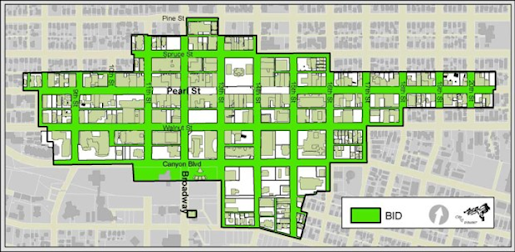
It appears that no one has really examined what the proposed CU South development would look like. Would it be an open park-like setting, or dense like downtown, or what? The current annexation agreement would allow CU or a private owner to build up to 750,000 square feet of non-residential development. Then to meet the annexation agreement’s 2-to-1 minimum residential-to-non-residential floor area ratio, 1,500,000 square feet of residential development would be required, for a total of 2.25 million square feet. And much more residential is allowed. Compare this to downtown Boulder. The Downtown Boulder Inc. website indicates that the downtown Boulder Improvement District (BID) has about 2.5 million square feet of development. So the square footage of development would be about equal. Downtown Boulder is about 125 acres. That’s the area from 8th to 20th Street, and from Canyon Boulevard to Spruce Street, with a few additions and subtractions. The CU South Development Zone, where all th...

Opinion: A flawed CU South process

A few weeks ago I made a request under the Colorado Open Records Act for all records of non-public closed door meetings on CU South that were attended by councilmembers Sam Weaver and Rachel Friend and city and/or University of Colorado Boulder staff. These meetings resulted from the Feb. 16, 2021, council discussion at which the council anointed Weaver and Friend to take on the role of advising the city manager and staff during the CU South negotiation process. I got the results back about a week later. I was astonished to discover that these two councilmembers had 19 closed door meetings, about one per week from March through July, with, variously, five city staff members, six CU staff members, and (bizarrely) a couple of CU’s PR consultants from the Trestle Strategy Group, and even some facilitators. Boulder Charter Section 9 states, “All meetings of the council or committees thereof shall be public.” Section 13 states, “Except for purposes of inquiry, the council shall deal with th...

CU South – The great giveaway

The  City of Boulder and University of Colorado Boulder are close to cutting a deal. CU gets to annex its flood prone property and then potentially make a pile of cash by selling most of it to a private developer, the residents of South Boulder get inadequate flood protection and the rest of us get none for the foreseeable future, traffic becomes a disaster, and the jobs/housing balance and affordable housing situation is made even worse. Here are the many facets to consider: It’s a non-solution to flooding:  The proposed detention pond on South Boulder Creek will fill up and overrun if the storm significantly exceeds the 100-year size, creating a shorter but still powerful flood. And that will definitely happen, given climate change and the huge increase in atmospheric water from global warming. That’s why detention ponds are the solution of last resort. Worse, once the land is developed, expanding the pond to 500-year capacity will not be realistic: there are issues with...

Opinion: Fixing ballot measures, past and present

  In 2019, Boulder citizens passed the ballot measure entitled “Tax on Tobacco Vaping Products.” Now the City Council is considering extending this to marijuana vaping devices. The 2019 measure imposed a 40% tax on the retail sales price of electronic smoking devices and components thereof, with “devices” being defined in the Boulder Revised Code, Chapter 4.5. That chapter is titled “Sale of Tobacco Products.” And it defines “Electronic smoking device” as “any product containing or delivering nicotine intended for human consumption …” During the discussions around that 2019 ballot measure, to the best of my memory and also based on feedback from others, there was no serious discussion about applying it to devices used for marijuana. And the people in the business seem to be in agreement that marijuana devices are not suitable for tobacco. So why is the Council considering extending this tax to marijuana devices? If they think this is a problem and that teenagers — or whoever — ...

Opinion: The smartest guys in the room

Remember back when the executives of Enron, convinced that they were the “smartest guys in the room”, instigated the California energy crisis, lost billions of dollars, and some ended up in jail. That title is now used to identify any group that thinks they are way smarter than they actually are. Thus we come to Boulder’s franchise agreement with Xcel/PSCo, where the smartest guys told us last fall that this was a great deal, we’d get ten years of back undergrounding, a whole host of great projects, and maybe get to 100% renewables by 2030. After the 53%/47% vote on the Franchise Agreement last November, Xcel/PSCo filed for PUC approval. Shortly thereafter I tried to intervene in the proceeding, because I wanted to ensure that specific issues would be considered. The Administrative Law Judge hearing the case, as well as the PUC itself, turned down my request to intervene, but not before I had communicated my issues. This triggered a closer look by both the PUC trial staff and the Off...

Opinion: CU South – “The Road Not Taken”

Robert Frost’s famous poem The Road Not Taken ends with: I shall be telling this with a sigh Somewhere ages and ages hence: Two roads diverged in a wood, and I— I took the one less traveled by,  And that has made all the difference.   For me, this captures the essence of the struggle around flood control for area around South Boulder Creek and what should happen on the CU South property. The “road” that the majority of the city council has committed to is almost certain to be looked back on as one taken with inadequate foresight. Climate change will likely cause significantly larger and more frequent floods. But using detention ponds (new to Boulder on this scale) means that a flood significantly bigger than designed for will overtop the dams and inundate the downstream areas anyway. And committing to allow CU to develop land that otherwise might be used to expand detention capacity means that improving protection levels above that currently planned will be lim...